
On July 10, 2019, Professor John E. Anderson of the University of Nebraska–Lincoln delivered an academic speech entitled “Debt and Land Finance among Chinese Cities” at Zhejiang University. More than 20 teachers and students from the School of PublicAffairs participated in the activity and had a heated discussion with Professor Anderson.
Professor Anderson has been active in the fields of urban economy and public finance for a long time. So far, he has published over 100 papers, books and reports. He was a senior economist at the White House from 2005 to 2006 and is still a senior adviser to governors, legislatures and other state agencies of many states such as Michigan and Nebraska. In recent years,he has been a Visiting Scholar at the Peking University—Lincoln Institute Center in Beijing, conducting research on Chinese municipalities and their public finances.
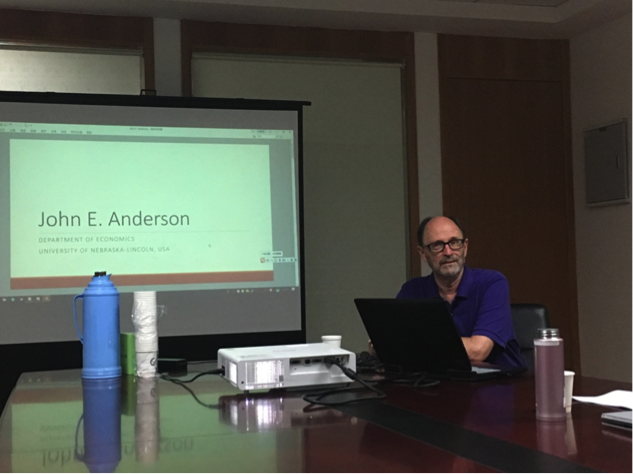
Picture I: Professor John E. Anderson Was Delivering a Speech
This speech focuses on common phenomena in Chinese cities: using quasi-municipal bond and land leasing to finance public infrastructure projects. Tobit model is used to analyze whether the urban debt problem is determined by the expected reduction of leasable land or by the local government’s inadequate ability to repay debt based on local land market conditions. The data of prefecture-level cities in China from 2008 to 2016, as well as Heckman’s sample selection model and Wooldridge’s sample selection model are used for analysis. Besides, the spatial autocorrelation is also considered to test the spatial spillover of local debt. The results show that in the data of 337 prefecture-level cities from 2009 to 2013, there is a obvious, positive and robust relationship between the value of land transfer per capita and the issuing price of quasi-municipal bond. This means that the more bonds issued by local governments, the better the real estate market will perform, and the more confident people will be in repaying their debts. In this way, without considering the uncertainties caused by land market fluctuations, when the land market works well, the governments will issue more bonds to expand their extra-budgetary land rental income and over-budgeted income while ignoring their actual number of leasable land. This aggressive financing behavior can be regarded as a moral hazard in the bond market.

Picture II: Professor John E. Anderson Was Delivering a Speech